
Point of Sale
Fast, high-frequency counter checkout
Explore Point of SaleA fast-food POS is judged on throughput and accuracy at peak. WDPW keeps the line moving with quick touch checkout, self-ordering kiosks, and a kitchen display that times and prioritizes every ticket, while the delivery-aggregator hub pulls online orders into the same queue. It runs on tablets you own, with no per-cashier fees, and keeps working offline.
Kiosk
Self-ordering kiosks take load off the counter
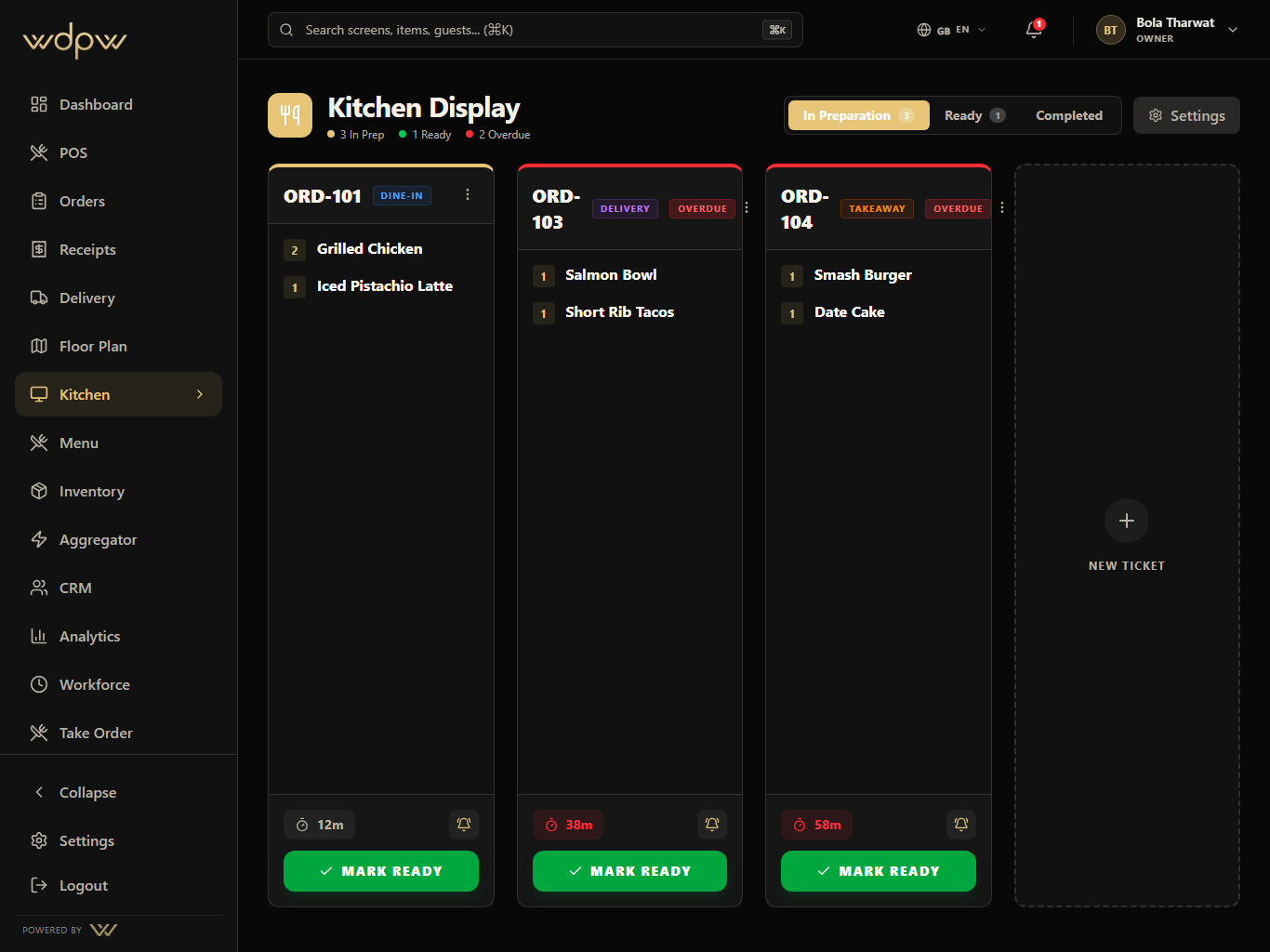
Timed KDS
Prep timers and overdue cues keep tickets moving
1 queue
Counter, kiosk, and delivery orders in one place
Fast food is a throughput business. At peak, the constraint is how many accurate orders you can take, fire, and hand off per minute across the counter, the kiosks, the drive-through line, and the delivery apps — all at once.
WDPW keeps all of those channels in one flow. Orders ring fast, fire to a kitchen display that shows what's overdue, and — as the aggregator integrations roll out — delivery orders drop into the same queue instead of a separate stack of tablets nobody is watching.
At the lunch rush, every extra tap and every ambiguous ticket compounds into a longer line and slower hand-offs.
Speed can't come at the cost of wrong orders — remakes cost more time than they save.
Talabat, Uber Eats, and Deliveroo orders arrive on their own devices, out of sync with the kitchen and the counter.
Thin fast-food margins mean labor has to be scheduled tightly against real demand.
A touch-first layout, category search, and quick reorders keep the counter fast when it's busy, with modifier groups for the builds that vary.
Kiosks let guests order and pay themselves, absorbing peak demand without adding a register or a cashier.
Digital prep lanes show each ticket's age and priority with overdue cues, and a bump flow notifies the counter the moment an order is ready.
The aggregator hub routes online orders, maps items to your menu, and pushes status back. Live platform integrations are rolling out, Talabat first — the hub is built and connections are being enabled.
Workforce scheduling and attendance (Growth plan and up) let you staff against the real busy hours you can see in analytics.
The order rings at the counter, a self-ordering kiosk, or arrives from a delivery channel.
It fires to the kitchen display with a prep timer and priority.
Overdue cues keep the oldest tickets moving to the front.
The kitchen bumps the ticket and the counter is notified it's ready to hand off.
Speed-of-service and volume by hour flow into analytics to schedule the next shift.
Fast, high-frequency counter checkout
Explore Point of SaleTimed prep lanes with overdue cues and bump flow
Explore Kitchen Display SystemSelf-ordering kiosks absorb peak demand
Explore Waiter and QR OrderingDelivery orders in one queue (rolling out)
Explore Aggregator ControlSpeed-of-service and busiest-hour reporting
Explore Analytics and ReportingRecipes deduct stock as combos ring
Explore Inventory and PurchasingThe best fast-food POS maximizes throughput and accuracy at peak. WDPW combines quick checkout, self-ordering kiosks, a timed kitchen display, and one queue for counter and delivery orders — on tablets you own, from EGP 15,000/year with no per-cashier fees.
Yes. Guests can order and pay at a self-ordering kiosk, which absorbs peak demand without adding a register. Kiosk ordering is available from the Starter plan.
The aggregator hub routes delivery orders, maps items to your menu, and pushes status back to the platform. Live integrations (Talabat first, then Uber Eats, Deliveroo, and more) are rolling out — the hub is built and connections are being enabled.
The KDS shows each ticket's age and priority with overdue cues, routes to stations, and lets the kitchen bump an order to notify the counter — replacing paper tickets and cutting misfires.
Yes. From the Growth plan, workforce scheduling and attendance let you staff against real demand, and analytics shows your busiest hours so you don't over- or under-schedule.